

Dec 1, 2025 · 15 min read
Celebrating 10 Years of Big Bets and Big Breakthroughs
Mark Zuckerberg and Priscilla Chan started the Chan Zuckerberg Initiative in 2016 to advance science, improve education, and support local communities. Driving progress on these goals required big bets — on the scientists asking bold questions, the technology that could accelerate breakthroughs, and the communities shaping solutions close to home.
A decade later, we can see what these bets made possible. We’ve built tools that enable scientists to watch inflammation unfold in real-time and map the human body down to a single cell. We’ve forged partnerships with patient communities that have turned diagnoses into discoveries, and with teachers and researchers who are shaping AI tools designed to better connect the way students learn to the tools they learn with.
To celebrate 10 years of CZI, here are 10 big bets we’ve made, what they’ve unlocked, and how they’re shaping breakthroughs.
1. The Biohub Model
At Biohub, we partner with brilliant researchers to tackle complex problems in science, collaborate across disciplines and institutions to drive fundamental biomedical research, develop powerful tools and techniques, and ultimately, make discoveries that could not happen in any other setting. This model has proven successful, first launched in the Bay Area in 2016 and expanded in 2023 to other regions, including Chicago and New York. We also have a partnership for a Seattle Hub and founded the Kempner Institute to study natural and artificial intelligence.
In San Francisco, when doctors were puzzled by MIS-C — a rare condition where some children who’d recovered from COVID-19 suddenly developed severe inflammation and organ failure — President Emeritus of Biohub San Francisco Joe DeRisi and a team of scientists came together to identify the mechanism behind many of these cases. Using a tool called PhIP-Seq, they discovered these children were producing antibodies that targeted not only the virus, but also their own immune system — opening new pathways for understanding autoimmune diseases more broadly.
In Chicago, Biohub Bioengineering President Shana Kelley and her team are building miniature protein sensors to measure inflammation as it rises and falls. Just as continuous glucose monitors transformed diabetes care, these biosensors could do the same for various conditions, helping doctors catch early signals before symptoms appear — fundamentally changing how we think about health by shifting from reacting to disease to preventing it altogether.
2. Imaging
Scientists need to study life at high fidelity across scales — from individual proteins to complex cell interactions — to understand the biology underlying health and disease. Early on, we recognized the need to push the boundaries of what’s visible inside our bodies — whether observing fleeting molecular interactions or mapping cells across entire tissues, organs or organisms. That insight led to a bold bet: investing in imaging programs, grantees, and eventually the Chan Zuckerberg Imaging Institute for Advanced Biological Imaging to make the invisible visible.
Building these tools has paved the way for countless breakthroughs. For example, at the University of California, Berkeley, physicist Holger Müller, working in collaboration with Biohub’s imaging team, developed a laser phase plate that improves cryo-electron tomography by using intense laser light to sharpen the molecular images they generate — revealing structures too small and faint to see before, all without damaging delicate samples. At a vastly different scale, an international collaboration we funded developed HiP-CT, an advanced X-ray technique that can image any part of the human body at cellular resolution. For the first time, researchers can visualize every cell within entire organs — connecting what happens at the cellular level to the bigger picture of how organs function and fail.
These advances fundamentally change what we can discover. Researchers now have unprecedented power to understand the molecular and cellular machines that are key to life processes, offering new insights into how disease begins.
3. Mapping, Standardizing and Sharing Cell Data
There’s more data about human cells than ever before, but until recently, it’s been nearly impossible to piece together. Imagine trying to assemble a 1,000-piece puzzle using pieces from dozens of different puzzles scattered across the floor. That’s what scientists have faced when trying to make sense of the world’s single-cell data.
We knew the key to unlocking new insights was standardizing and mapping large volumes of cell data. That is why we supported the Human Cell Atlas (HCA) — an international effort to create an open, shareable reference map of our cells. HCA researchers have analyzed more than 39 million cells, revealing a diverse array of new, rare and common cell types.
For example, they identified a new cell type in the airway that may be implicated in cystic fibrosis, a genetic disorder characterized by persistent lung infections and progressive lung function decline. Researchers also used HCA data to identify cells in the eyes and nose that may serve as the initial entry route for SARS-CoV-2, the virus that causes COVID-19.
As the HCA has expanded, we’ve funded projects dedicated to mapping cells in healthy pediatric tissue to better understand how children’s biology differs from adults — data that’s critical for developing new treatments for childhood diseases. We also supported projects like Tabula Sapiens — the largest atlas to include multiple tissues from the same human donors — which mapped nearly 500,000 cells from 24 human tissues and organs, including the lungs, skin, heart, and blood.
To make this growing amount of data accessible and searchable, we built CELL×GENE, an interactive data exploration platform. One of the tools within the platform is Census, which provides scalable access to the largest standardized collection of single-cell data — more than 500 datasets and 33 million unique cells. By providing researchers with direct access for their own analyses, Census is helping to accelerate discovery across the field. Today, nearly 7,000 researchers use it weekly.
A variety of models have utilized CELL×GENE data as a core training dataset, including scGPT, a foundational model for single-cell biology. This work represents an early step toward building AI-powered virtual cells that could help scientists test ideas, generate hypotheses, and accelerate discoveries faster than ever before.
4. AI-First Compute Infrastructure
In 2023, we made a bet to build the largest AI cluster for nonprofit scientific research, and in 2025, announced plans to increase our compute by tenfold, scaling to 10,000 GPUs in the coming years.
That investment enables our vision to build a family of AI models that capture cell biology across molecular, cellular and systems levels, allowing scientists to predict how biological systems will operate and how to change their possible future trajectories — accelerating the science for curing or preventing all diseases.
As a result, we’ve seen breakthroughs such as TranscriptFormer, GREmLN, VariantFormer and rBio. These models work together to give researchers a multi-scale view of biology. TranscriptFormer — trained on 112 million cells across 12 species spanning 1.5 billion years of evolution — can predict cell types across species and identify disease states. GREmLN — trained on more than 11 million data points from CELL×GENE — captures the logic behind how genes and proteins interact, allowing scientists to identify which genes may be optimally targeted to block cancer growth or reprogram the function of immune cells. At the individual level, VariantFormer — trained on 21,000 samples from 2,330 donors across 54 tissues and seven cell lines — translates personal genetic variations into tissue-specific activity patterns at scale, providing a powerful new way to examine how someone’s unique genetic makeup influences their health.
To make these sophisticated models accessible to more researchers, rBio — the first reasoning model trained on virtual cell simulations — allows scientists to interact with such models in plain language, turning them into biology teachers and enabling researchers to study biological questions without needing specialized expertise.
Linking gene regulation, cellular identity, and the effects of genetic variation, our AI models are built to transform how scientists understand complex biological systems — how they function and how they can be altered to improve human health.
5. Patient-Led Research
Rare disease is anything but rare. More than 10,000 rare diseases affect over 400 million people worldwide, yet fewer than 5% have approved treatments. Our Rare As One Project is committed to centering patients in biomedical research and uniting rare disease communities in their quest for cures. The impact of the Rare As One Network is far-reaching: Organizations have engaged over 18,000 researchers, developed and supported over 500 research projects, and supported the development and launch of 30 clinical trials, as well as the approval of one Food and Drug Administration-approved therapy.
Rare As One grantee Kim Nye’s journey into rare disease advocacy began when two of her children were the first to be diagnosed with SLC13A5 Epilepsy, a severe neurological disorder. With almost nothing known about the condition, Nye launched the TESS Research Foundation to drive research and develop treatments. In less than a decade, her organization built a global patient registry, biobank, more than a dozen cell lines and disease models, united scientists from around the world, and, in partnership with a researcher at UT Southwestern, developed a candidate gene therapy. This year, the foundation reached a major milestone and is sponsoring its own FDA trial for a gene therapy designed to treat SLC13A5 Epilepsy — the first treatment specifically developed for this rare disease. Tess Research Foundation is one of 94 patient communities we support, each driving incredible impact in its disease areas.
Physician, scientist and patient David Fajgenbaum is another powerful example of what’s possible when patients lead, communities come together, and technology accelerates discovery. After nearly dying five times from Castleman disease over three and a half years, Fajgenbaum analyzed his own blood samples during relapses and discovered that an existing drug, sirolimus, could treat his condition. That discovery — and more than 11 years of remission since — led him to create Every Cure, a nonprofit organization dedicated to uncovering all possible uses of all existing FDA-approved drugs. Using AI to scan 75 million drug-disease combinations, Every Cure has identified nine repurposing opportunities in just the past year, building on 14 treatments Fajgenbaum’s lab advanced over the previous decade that have saved thousands of lives.
6. Open Science
Open science — from sharing scientific protocols to preprints to software code and data — is how we accelerate progress toward our mission, by making the discovery process open and reproducible, and helping scientists build on each other’s work. From our earliest days, we’ve led the effort to make biomedical research outputs open and accessible.
We’ve funded bioRxiv and medRxiv, the preprint servers that allow scientists to share research papers before formal peer review, transforming how researchers communicate and collaborate. Through our Essential Open Source Software program, we supported foundational computing tools such as NumPy, scikit-learn, and SciPy, along with over 200 software tools used by millions of scientists globally — the pillars on which modern computational and AI methods for science are built. And we’ve championed open data sharing, ensuring that resources like CELL×GENE and the Human Cell Atlas remain freely accessible to researchers worldwide.
But sustaining that open exchange requires long-term infrastructure and support. That’s why we partnered with Cold Spring Harbor Laboratory to launch openRxiv, a nonprofit dedicated to ensuring bioRxiv and medRxiv remain freely available and community-driven for generations to come and transforming open scientific dissemination in the life sciences.
By strengthening these platforms and tools, scientists everywhere can continue building on each other’s work, sparking the collaborations that lead to breakthroughs.
7. Collaborative Research Models in Neurodegenerative Disease
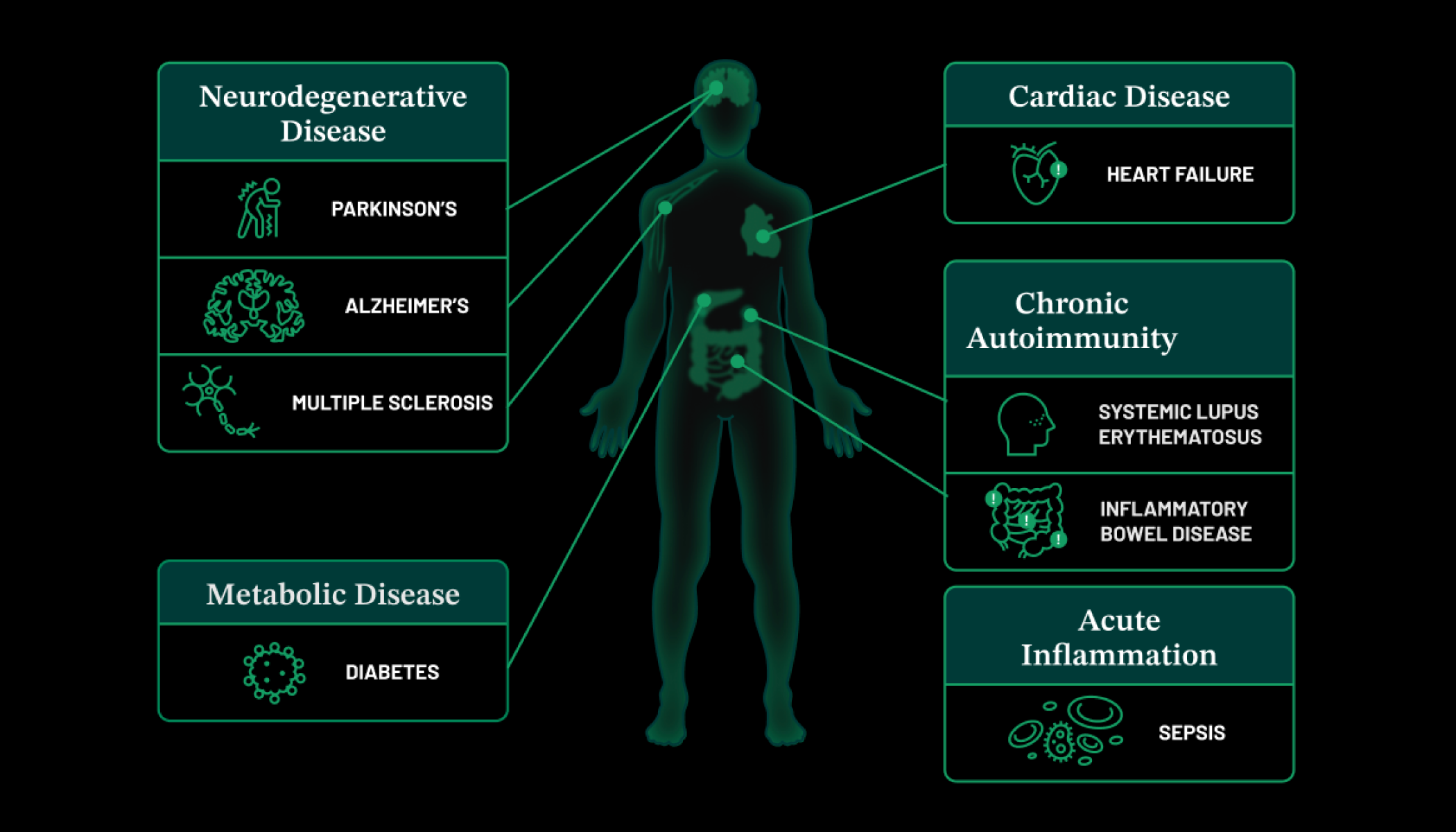
Neurodegenerative diseases like Alzheimer’s, Parkinson’s, ALS and Huntington’s Disease are a leading cause of death and disability worldwide, yet there are no effective therapies to cure or prevent most of these disorders. In 2018, we piloted innovative collaborative research models — bringing together scientists across disciplines, investing in high-risk/high-reward ideas, and building shared tools and resources to accelerate discovery and open new paths toward treatments and cures.
This effort to rethink how research is approached enabled breakthroughs across the field. Through the Neurodegeneration Challenge Network, Dr. Debora Marks from Harvard University used AI and machine learning to discover how proteins interact and how fibrils — the protein clumps that are critical to understanding neurodegenerative disease — are developed.
The same commitment to bold, collaborative neuroscience research extended beyond disease mechanisms to restoring abilities lost to injury. Biohub San Francisco Investigator Edward Chang and his team have built technology that helps people who are paralyzed speak again by translating brain signals into words in real-time. For Ann, who lost her ability to speak after a stroke 18 years ago, this innovation has been life-changing. The system doesn’t just turn thoughts into words — it recreates her voice from old recordings and even generates facial expressions through a digital avatar.
It’s a glimpse of what’s ahead: AI and neuroscience working together to understand disease and restore what’s been lost.
8. Co-Designing Education Technology Tools
For over a decade, we’ve worked to bring learning science into classrooms — supporting research on how students learn, partnering with educators to translate findings into practice, and co-designing tools with teachers and researchers. This extensive foundation taught us that technology works best when it’s built alongside educators to address their real needs.
Now, through Learning Commons, we’re taking that work deeper — building open infrastructure like Knowledge Graph, a structured dataset that connects curricula, state standards, and learning science. By partnering with curriculum providers, researchers, and educational organizations, we’re creating AI tools for public good that scale proven teaching and learning practices.
Playlab, a nonprofit technology organization, exemplifies how this infrastructure can be used. Using Knowledge Graph, Playlab connects AI tools directly to learning science, curriculum and academic standards — giving teachers the agency to shape how AI shows up in their classrooms and helping them plan lessons, unpack standards, and focus on students’ growth.
This approach ensures technology reflects the realities of classrooms, building tools that support educators and make high-quality, research-backed instruction more accessible.
9. Community-Led Solutions
Real change often starts close to home. Our co-founders, Mark and Priscilla, are committed to supporting the communities where they live and work by partnering with local nonprofits, supporting local solutions, and addressing emerging needs. We’ve invested more than $150 million over the past decade in hundreds of Bay Area organizations and initiatives that help our communities thrive. In Hawai’i, we have committed more than $100 million to nonprofit organizations since 2016, including a $50 million gift to the University of Hawai‘i for statewide ocean conservation.
One cornerstone of these investments is the Chan Zuckerberg Community Fund. Since its start in 2017, the fund has supported over 200 local nonprofits that provide essential safety-net services, including food, housing, emergency assistance and more. It supports organizations leading the work in their communities — organizations that know their neighbors best and understand what solutions will last. LifeMoves, a Community Fund partner, helps unsheltered individuals and families find stability and long-term housing. The organization provides up to a year of rental assistance and case management to help people not just find housing, but build a foundation to support long-term housing retention.
We also work closely with long-standing partners across San Mateo County, California, who share this community-centered approach. Daly City Partnership reflects that spirit. From youth art programs and job-readiness workshops to counseling and family services, they’re creating opportunities across generations and helping families build stronger foundations for the future.
10. Building Momentum for the Long Term
After 10 years, our work continues to accelerate progress in science, education, and our local communities. We launched Biohub and Learning Commons to strengthen the operational and technical foundation that sustains that progress.
Biohub is bringing together frontier AI with frontier biology for the first time to better predict how human cells behave and how they can change, bringing together scientists and engineers with a shared mission to cure or prevent all disease.
Learning Commons is building new ways to scale proven teaching and learning practices to benefit every learner.
Together, these organizations ensure our bold bets endure — positioning us to move faster and shape the next decade of breakthroughs.


Sorry, marketing cookies are required to view this form.